
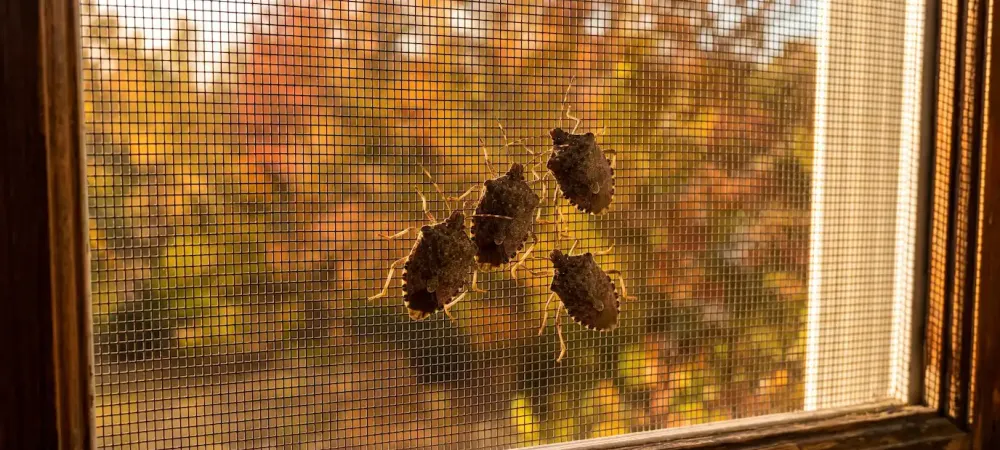
Why Stink Bugs Swarm Oklahoma Homes Every September: What the Science Says About Keeping Them Out
One stink bug on your window screen in September is not a coincidence. It's a signal. Brown marmorated stink bugs use aggregation pheromones to recruit other insects to the same structure, which means the one you just spotted is actively broadcasting a chemical invitation to dozens more. Understanding this mechanism, and the specific two-week entry window it creates, is what separates prevention from wishful thinking for Oklahoma homeowners this fall.
Which Insects Overwinter in Oklahoma Homes
Brown marmorated stink bugs get the most attention, but they're not the only overwintering insects targeting homes in northeast Oklahoma each fall. Three species follow similar behavior: seeking warmth through small structural gaps when outdoor temperatures begin dropping.
| Insect | Appearance | Entry Period | Key Behavior |
|---|---|---|---|
| Brown Marmorated Stink Bug | Mottled brown shield shape, ~17mm | Late Aug – mid Oct | Pheromone aggregation; releases odor when crushed |
| Box Elder Bug | Black with red markings, flat, ~12mm | September – October | Congregates in large groups on south-facing walls before entry |
| Asian Lady Beetle | Orange to red, variable spots, ~6mm | October – November | Follows pheromone trails; bites when handled, stains when crushed |
All three use the same strategy: find a gap in the building envelope, aggregate with others of their species, and go dormant in wall voids or attic spaces until spring. The structural entry points that let one species in typically let the others in too, which is why a fall treatment targeting entry points addresses the problem across all three.
Why One Stink Bug on Your Wall Means More Are Already Coming
The Science
Brown marmorated stink bugs release two aggregation pheromones, trans-2-decenal and trans-2-octenal, that attract other individuals to the same overwintering site. Research published in Royal Society Open Science (2020) confirmed that these chemical signals persist on surfaces and continue recruiting insects for an extended period after initial contact.
The brown marmorated stink bug (Halyomorpha halys) arrived in the United States around 1996, likely as a stowaway in packing materials from eastern Asia. It's now established across Oklahoma and behaves the same way it does in its native range: aggregating at warm structures in late summer using chemical communication. A home that hosts stink bugs one fall is likely to attract them the following fall as well, because the pheromone residue left behind continues to function as a beacon even after the insects have gone. This site-fidelity behavior is one reason infestations tend to worsen year over year when entry points aren't sealed.
The Entry Window That Changes Everything
In northeast Oklahoma, the window when stink bugs are actively seeking overwintering sites runs roughly from late August through mid-October, with peak entry concentrated in the first two weeks of September when overnight temperatures consistently drop below 60°F but daytime highs are still warm. During this window, they congregate on sun-warmed south- and west-facing walls, probe structural gaps, and move inside in the late afternoon.
Outside this window, treatment options change. Before it opens, there's nothing to treat yet. After it closes, the bugs are already dormant inside wall voids where insecticides can't reach them effectively. This makes late August through early September the only timing that gives prevention a real chance, which is why homeowners who wait until they see bugs inside have already missed the most important intervention point.
What Actually Works and What Makes the Problem Worse
Common Mistake
Killing stink bugs you find inside doesn't address the source. The entry points that let the first ones in are still open, and more will use the same gaps within days.
Exclusion, meaning sealing the physical gaps they use to enter, is the most effective long-term control. The priority areas are: gaps around utility penetrations and pipe entries, damaged or missing door sweeps and threshold seals, window screen tears and frame gaps, gaps where siding meets the foundation, and soffit and roof vents without screens. These don't require a contractor in most cases; they require inspection and time. A close look at common pest entry points on a south-facing wall before September is the single most impactful thing a homeowner can do.
What doesn't work: vacuuming them up without emptying the bag immediately (the bag traps the odor and continues attracting them), sealing them inside once they're already in wall voids (they'll emerge in spring and enter living spaces looking for a way out), or using indoor sprays on congregating groups on exterior walls (this disperses them and makes them harder to manage, not easier).
What a Professional Treatment Adds This Time of Year
A targeted exterior perimeter treatment in late August or early September, applied to the building envelope, entry points, and south-facing surfaces where stink bugs aggregate, interrupts the entry process before it becomes an indoor problem. Residual insecticides applied to these surfaces remain active through the critical entry window, reducing the number of insects that successfully move inside. The treatment is timed specifically to the aggregation and entry behavior, not reactive to insects already indoors.
Dandi Guaranty Pest Control also inspects for the structural gaps that make exclusion incomplete, which addresses the root cause rather than just reducing populations through chemistry alone. For homes that dealt with overwintering insects last year, a professional treatment this September is the most reliable way to avoid the same problem in October.
Frequently Asked Questions
Why do stink bugs keep coming back to the same house every year?
Aggregation pheromones left on the structure from previous seasons continue to attract new insects. Brown marmorated stink bugs exhibit strong site fidelity: a home that hosted them one fall is chemically marked as a viable overwintering site. Sealing entry points reduces how many can get in, but the chemical signal persists on exterior surfaces for an extended period. Professional exterior treatment during the entry window helps disrupt this cycle.
Is it safe to vacuum up stink bugs?
Yes, but the bag or canister needs to be emptied immediately outside after use. Stink bugs trapped in a vacuum bag release their odor compounds and the smell can linger for days. Use a dedicated hand vacuum if you're dealing with large numbers, and empty it into a sealed bag for outdoor disposal. Don't crush them; that releases the same odor and, per the research, may actually attract more insects to the area.
Will stink bugs damage my home or belongings?
No. Brown marmorated stink bugs, box elder bugs, and Asian lady beetles are nuisance pests; they don't bite (aside from occasional accidental contact with Asian lady beetles), don't sting, and don't cause structural damage. The primary issues are odor when disturbed or crushed, staining on light-colored surfaces from Asian lady beetles, and the sheer volume of insects when populations are large. Box elder bugs can occasionally damage plants but cause minimal indoor harm.
When is the right time to call a pest control company about overwintering insects?
Late August or early September, before the insects are actively entering. A perimeter treatment timed to the aggregation window is significantly more effective than reactive treatment once bugs are inside wall voids. If you already have insects inside from a prior season and want to prevent a repeat, September is still early enough in 2026 to make a difference this fall.
Dealing With Stink Bugs or Fall Insects This Season?
The entry window for overwintering insects in Oklahoma runs through mid-October. If you're seeing them now, there's still time for a perimeter treatment to help. Call Dandi Guaranty Pest Control at 918-622-7378 and we'll walk you through the right next step.
Call Dandi Guaranty Pest ControlSources
Khrimian, A. et al. (2020). Aggregation pheromone of the brown marmorated stink bug. Royal Society Open Science, 7(11). https://royalsocietypublishing.org/doi/10.1098/rsos.201371